
As parents and caregivers, we celebrate every new sound, word, and conversation. However, it is not always easy to determine whether a child’s communication skills are developing as expected or whether additional support may be needed.
My name is Isis F. Thomas, founder of Crimson Therapy Services and an ASHA-certified speech-language pathologist licensed in Georgia and South Carolina. Since establishing Crimson Therapy Services in 2021, I have remained committed to helping children communicate more effectively through early intervention, speech and language therapy, and augmentative and alternative communication, commonly known as AAC.
Recognizing Early Signs of a Language Delay
A language delay may affect a child’s ability to understand others, express wants and needs, follow directions, answer questions, or participate in conversations. Although children develop at different rates, developmental milestones can help families monitor their child’s progress.
Here are several communication skills commonly observed during early childhood:
Birth to 6 months: Babies begin communicating through crying, cooing, smiling, and reacting to familiar voices and sounds.
7 to 12 months: Babies typically begin babbling, responding to their names, understanding simple words such as “no,” using gestures such as waving, and attempting early words such as “hi” or “bye.”
13 to 18 months: Toddlers may begin following simple directions, answering yes-or-no questions with gestures, identifying familiar body parts, and using words to request preferred items.
19 to 24 months: Children often understand an increasing number of words, begin combining two words, and follow familiar directions. Examples of early phrases may include “more juice,” “mommy help,” or “go outside.”
2 to 3 years: Children typically begin using longer phrases, asking and answering simple questions, following directions, and participating in short conversations with familiar people.
These milestones are general guidelines. A child may need an evaluation if they are not meeting several expected milestones, lose communication skills they previously demonstrated, become frequently frustrated when attempting to communicate, or have difficulty understanding everyday language.
When Should You Seek an Evaluation?
Parents do not have to wait until a child begins school to address communication concerns. Early evaluation can help determine whether a child’s development is within the expected range or whether speech-language therapy may be beneficial.
Consider speaking with a pediatrician or speech-language pathologist if your child:
- Is not babbling or using gestures by approximately 12 months
- Has very few words by 18 months
- Is not combining words by approximately 2 years
- Has difficulty following simple directions
- Does not consistently respond to their name
- Becomes frustrated because others cannot understand them
- Has difficulty expressing basic wants and needs
- Loses words or communication abilities they previously used
- Relies primarily on gestures without developing additional ways to communicate
A child does not have to demonstrate every sign on this list to benefit from an evaluation. If you have concerns, it is appropriate to ask questions and seek professional guidance.
How to Get Your Child Evaluated
The evaluation process generally includes the following steps:
- Discuss your concerns. Speak with your child’s pediatrician or contact a speech therapy practice directly.
- Confirm referral requirements. Depending on your insurance plan, you may need a physician’s referral or prescription before beginning services.
- Schedule an evaluation. A speech-language pathologist will gather information about your child’s development and assess their current communication skills.
- Review the results. The therapist will explain the findings, answer your questions, and recommend therapy when appropriate.
- Develop an individualized plan. If services are recommended, therapy goals will be based on your child’s specific strengths and communication needs.
Communication Can Take Many Forms
Speech therapy is not limited to helping a child pronounce words correctly. It may address receptive language, expressive language, social communication, speech sound production, and functional communication.
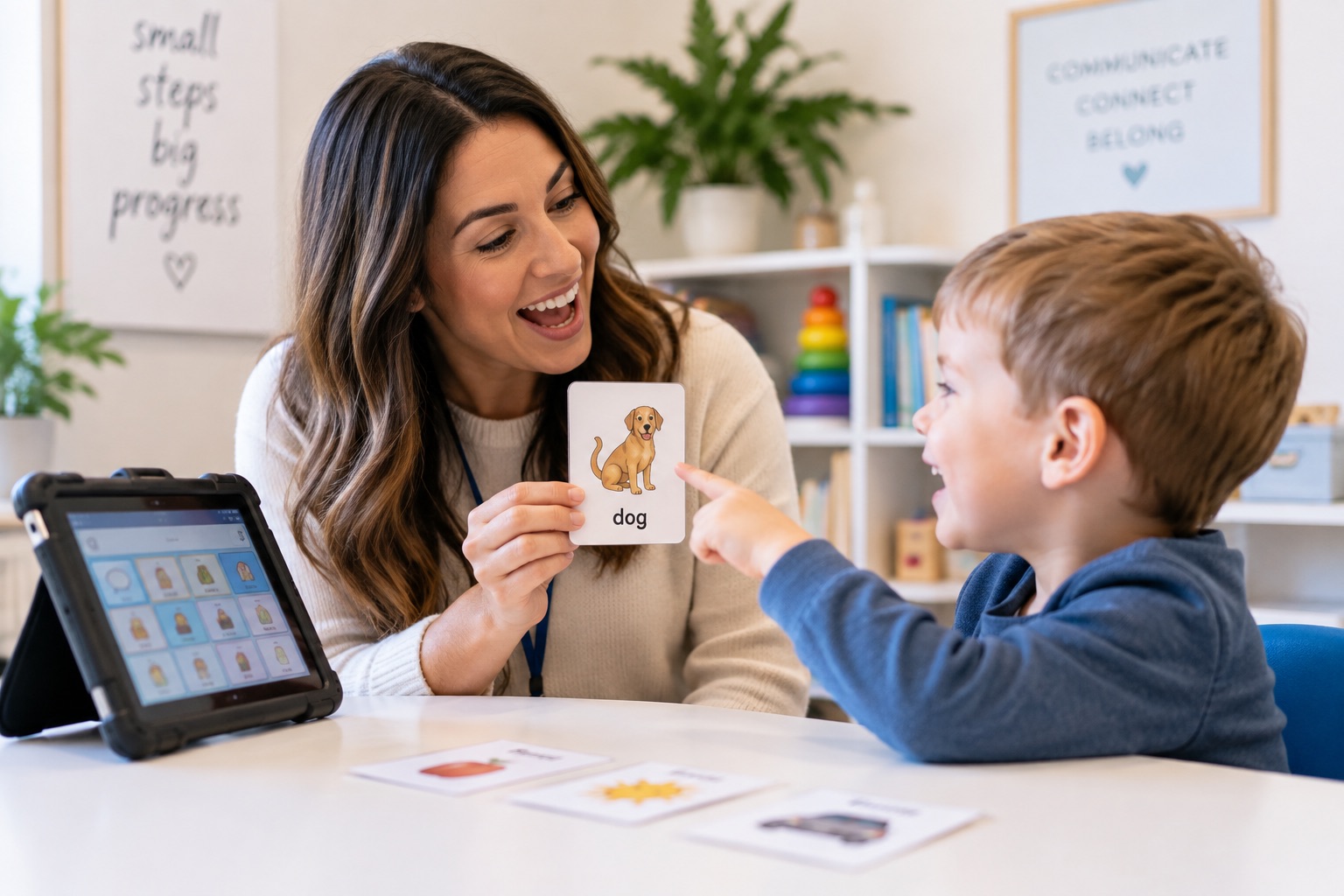
Some children communicate verbally, while others benefit from gestures, pictures, communication boards, or speech-generating AAC devices. Introducing AAC does not prevent a child from developing speech. Instead, it provides another meaningful way for the child to express wants, needs, thoughts, and feelings.
Early Support Can Make a Difference
Seeking an evaluation does not automatically mean that something is seriously wrong. An evaluation provides valuable information about your child’s development and helps determine whether additional support is needed.
At Crimson Therapy Services, we believe every child deserves an effective and dependable way to communicate. If you have concerns about your child’s speech, language, or overall communication development, contact our team to learn more about scheduling an evaluation.